
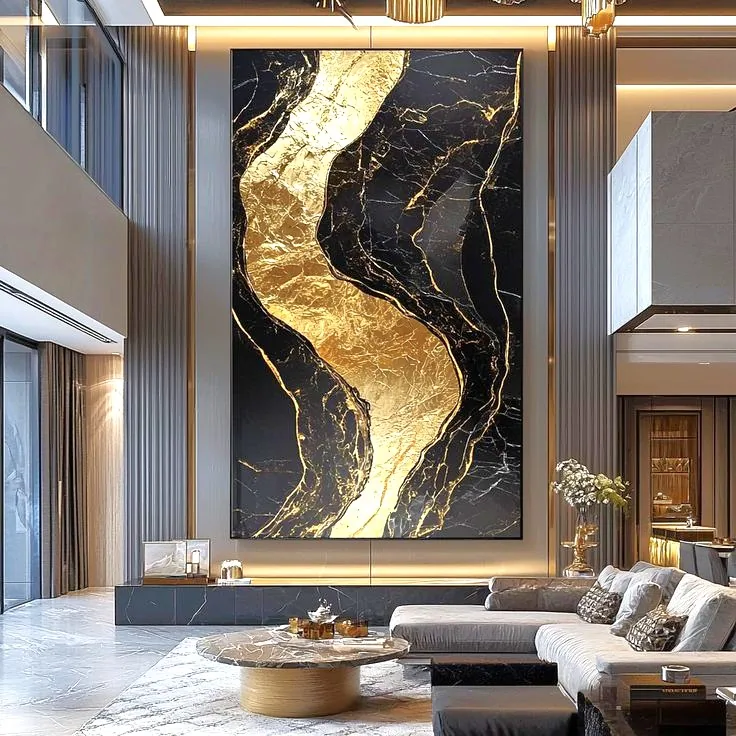
Gilding is the only finish we offer where the materials cost more than the labour. A square metre of 23.5 carat gold leaf is around AED 1,800 in materials alone. So the method matters — and the choice between water gilding and mordant gilding is a real decision, not a craft affectation.
Water gilding
The historical method. Substrate is sized with gesso, then with bole (a fine clay-based primer in red, yellow or grey). The bole is sealed with a thin layer of liquid (water and gelatin or rabbit-skin glue). Leaf is laid on the wet bole — surface tension pulls it down — then burnished with a real agate burnisher when it's dry. The result is a true mirror finish; the gilding seems to dissolve into the wall. This is the method for accent walls, alcoves, ceilings.
Mordant gilding
The faster, more durable method. A slow-drying oil mordant is brushed onto the substrate; once it's tacky (3–12 hours later), leaf is laid on top and pressed down. No burnish — the finish is satin rather than mirror. This is the method for areas that will see touch — door panels, low-level walls, furniture.
Which to specify
If the surface is high (above 1.8 m) and in a feature lighting scheme — water gild. If the surface is low or will be touched — mordant gild. If you're not sure, ask us; we'll quote both, and you can compare samples.